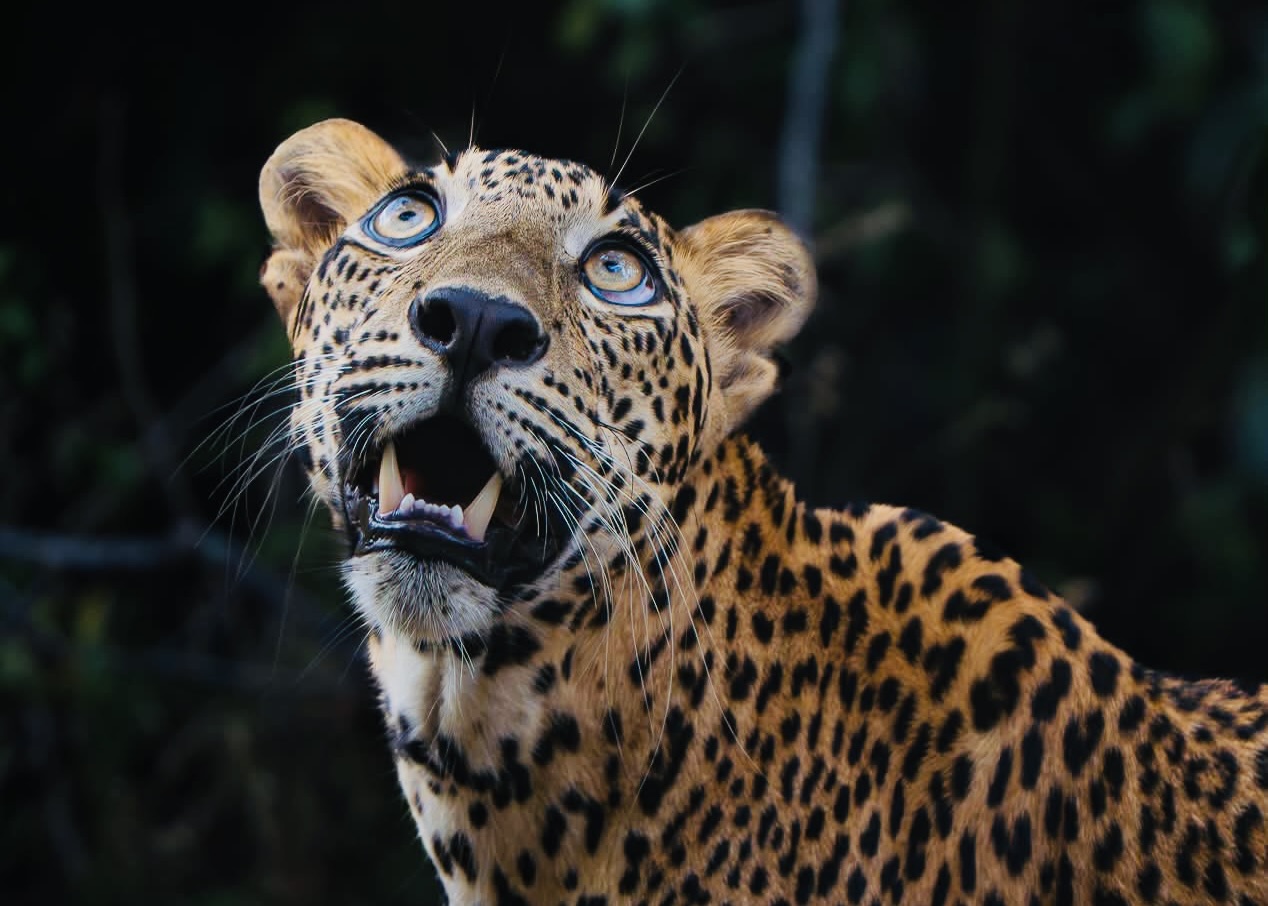
The Kingdom of the Sri Lankan Leopard (Panthera pardus kotiya)
Yala National Park is internationally famous for having the highest concentration of leopards per square
kilometer anywhere on Earth. Because leopards in Yala are the island's supreme apex predator with no
lions or hyenas to compete against, they exhibit bold diurnal hunting behavior, often seen resting atop
palu trees or granite rock outcrops during early morning and late afternoon game drives.
The park encompasses five main blocks (Blocks 1 to 5) alongside adjoining nature reserves like Kumana
and Lunugamvehera. Block 1 (Ruhuna) and Block 5 are world-renowned for game drives, featuring moist
monsoon forests, dry thorny scrublands, freshwater tanks, brackish lagoons, and Indian Ocean coastline.
Big 3 Wildlife Encounters & Biodiversity
Beyond the famous Sri Lankan leopard, Yala is sanctuary to 44 mammal species including the Sri Lankan
Sloth Bear (Melursus ursinus inornatus), wild Asian Elephants, Mugger Crocodiles, Chital
Spotted Deer, Sambars, Wild Water Buffaloes, and Golden Jackals roaming freely across dry zone monsoon
forests.
Avian Haven & Migratory Wetlands
Yala is recognized as an Important Bird Area (IBA) hosting 215 bird species, including 7 endemic species
such as the Sri Lanka Junglefowl and Black-capped Bulbul. During the winter migratory season, thousands
of waterfowl species nest along the saline coastal lagoons of Buttuwa and Pilinnawa.
Coastal Wilderness & Ancient Ruhuna Kingdom Monastic Ruins
Yala is steeped in rich historical heritage, having served as a thriving agricultural center during the
ancient Ruhuna Kingdom. Monastic ruins like the 2,200-year-old Sithulpawwa Rock Temple and Magul Maha
Viharaya rest peacefully inside the park boundary, creating an unparalleled blend of ancient
civilization and wild wilderness.